[01]
A builder people can drive by hand
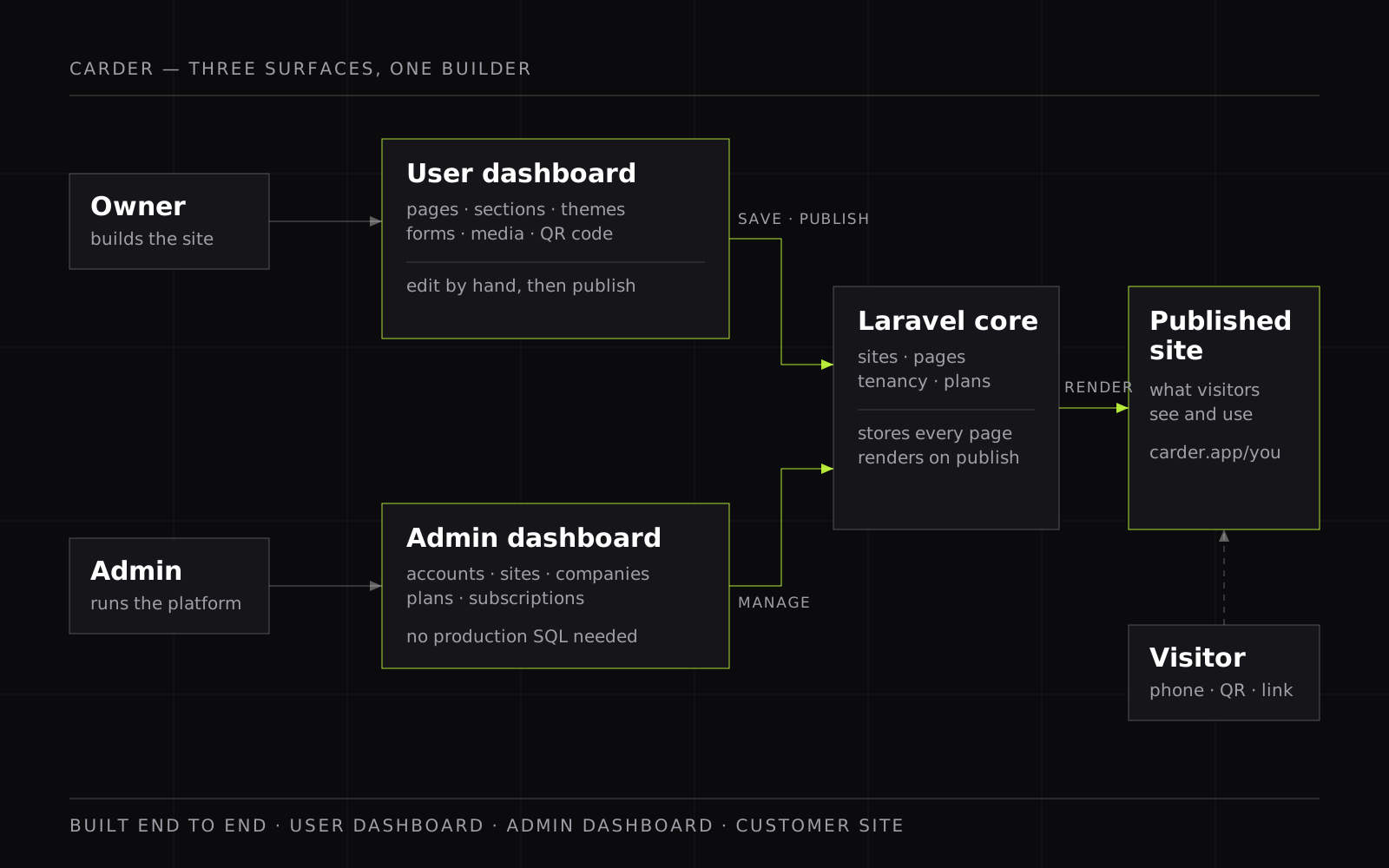
Built end to end: the user dashboard where owners create and edit every page, the admin dashboard across all accounts and sites, and the customer-facing site their visitors see.
An AI mini-site builder for local businesses: one prompt becomes a complete site in about 30 seconds. I built the site builder end to end, then automated it with RAG over each user's own uploads, and led the backend and data.
[01] The problem
Small businesses often need more than a link list but cannot justify a custom site or learn a page builder. Carder first needed a builder people could drive by hand, then a way to skip it: one sentence in, a finished site out. All of it had to ship into a live Laravel product without disrupting paying customers.
[02] The constraints
Every schema change had to support a running application and every deployment needed a rollback path that did not require restoring a backup.
The established Laravel core stayed in place. New services had to integrate with its database and workflows rather than justify a rewrite.
With no dedicated platform team, every new service also became ours to deploy, monitor and support.
[03] The approach
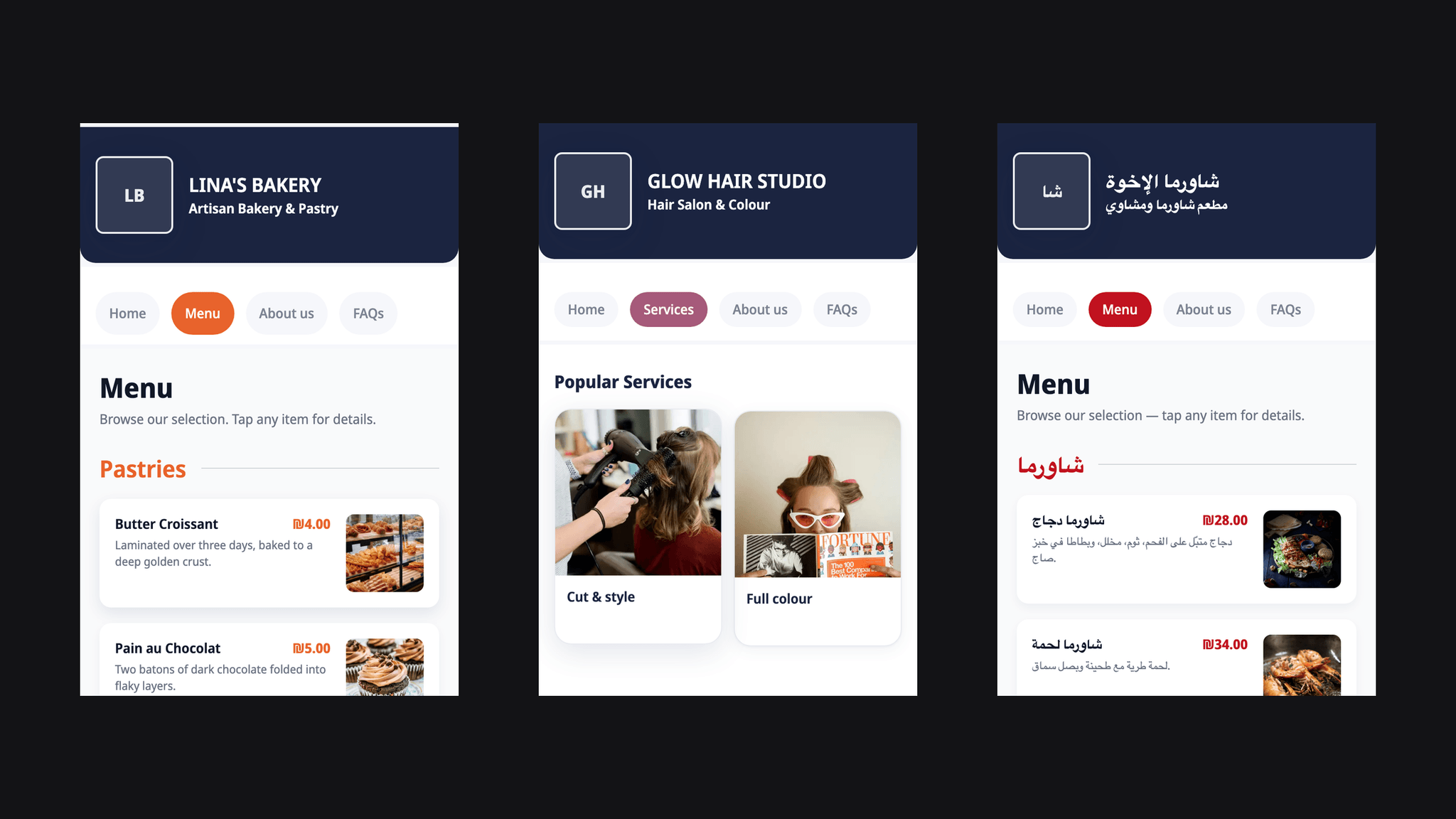
I built the manual builder first: the user dashboard where owners create and edit every page, the admin dashboard across all accounts, and the customer-facing site it publishes. Then I automated the same flow with our pre-trained model, grounded by RAG over each user's uploads and steered by instructions they can fully customise. Underneath, Laravel stayed the core, media moved to object storage and billing state came from its authoritative source.
* REQUEST, BILLING AND MEDIA PATHS
[04] The trade-offs
[01]
[02]
[03]
[04]
[05]
[05] The build
[01]
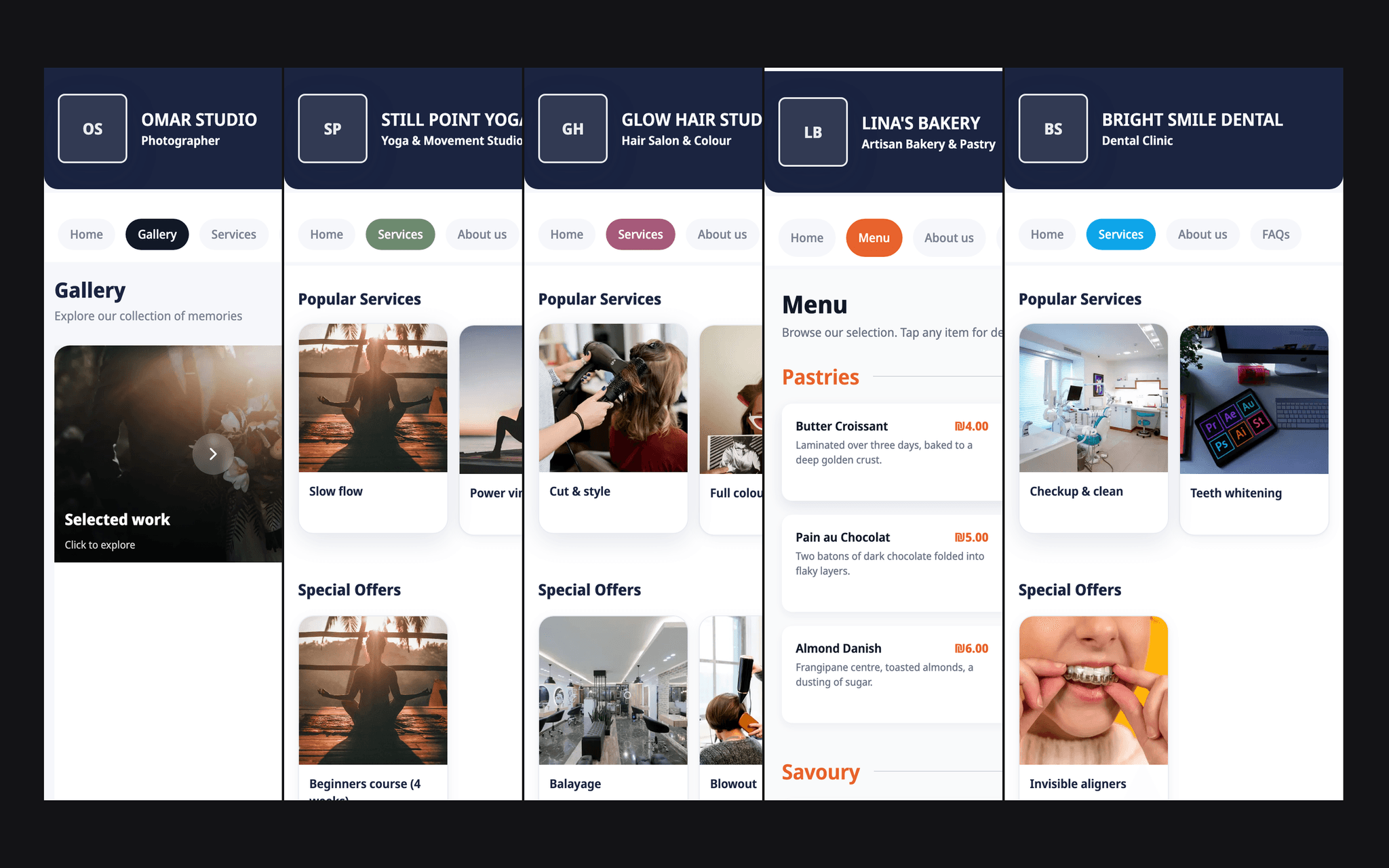
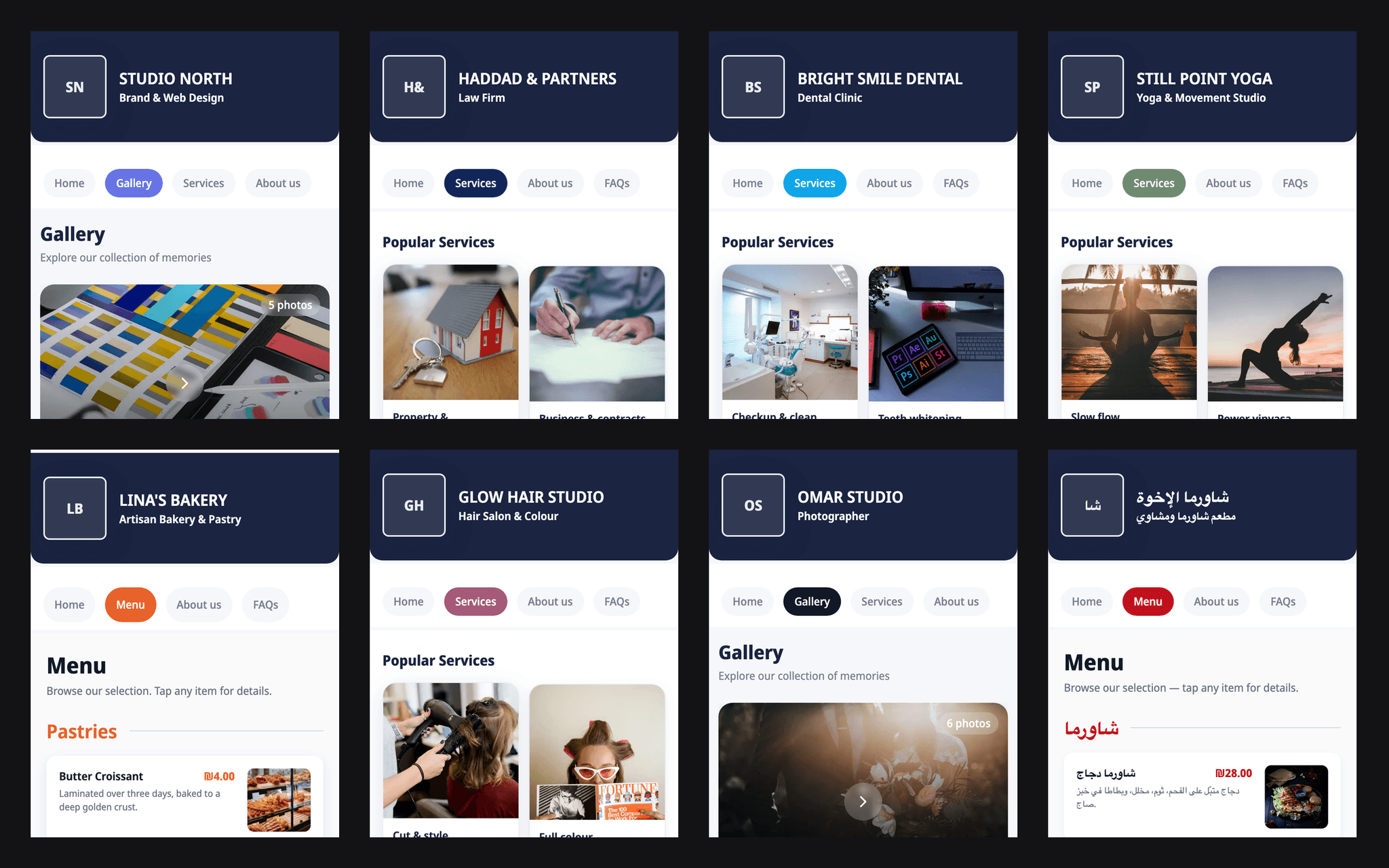
Built end to end: the user dashboard where owners create and edit every page, the admin dashboard across all accounts and sites, and the customer-facing site their visitors see.
[02]
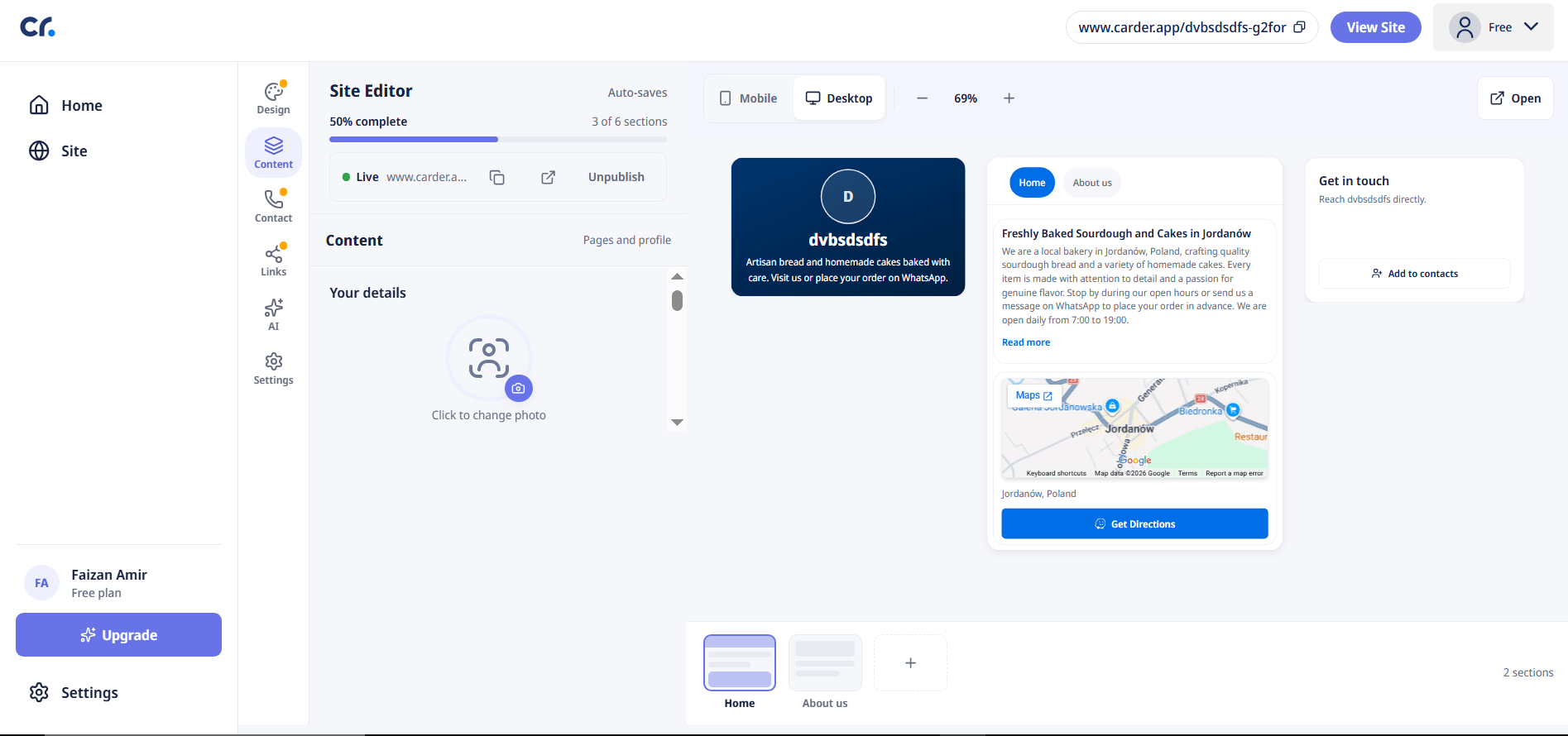
Owners build a site section by section with a live preview in mobile or desktop view. Design, content, contact, links, AI and settings each have their own panel, every change auto-saves, and a progress meter shows which sections are complete before the site goes live or is unpublished.
[03]
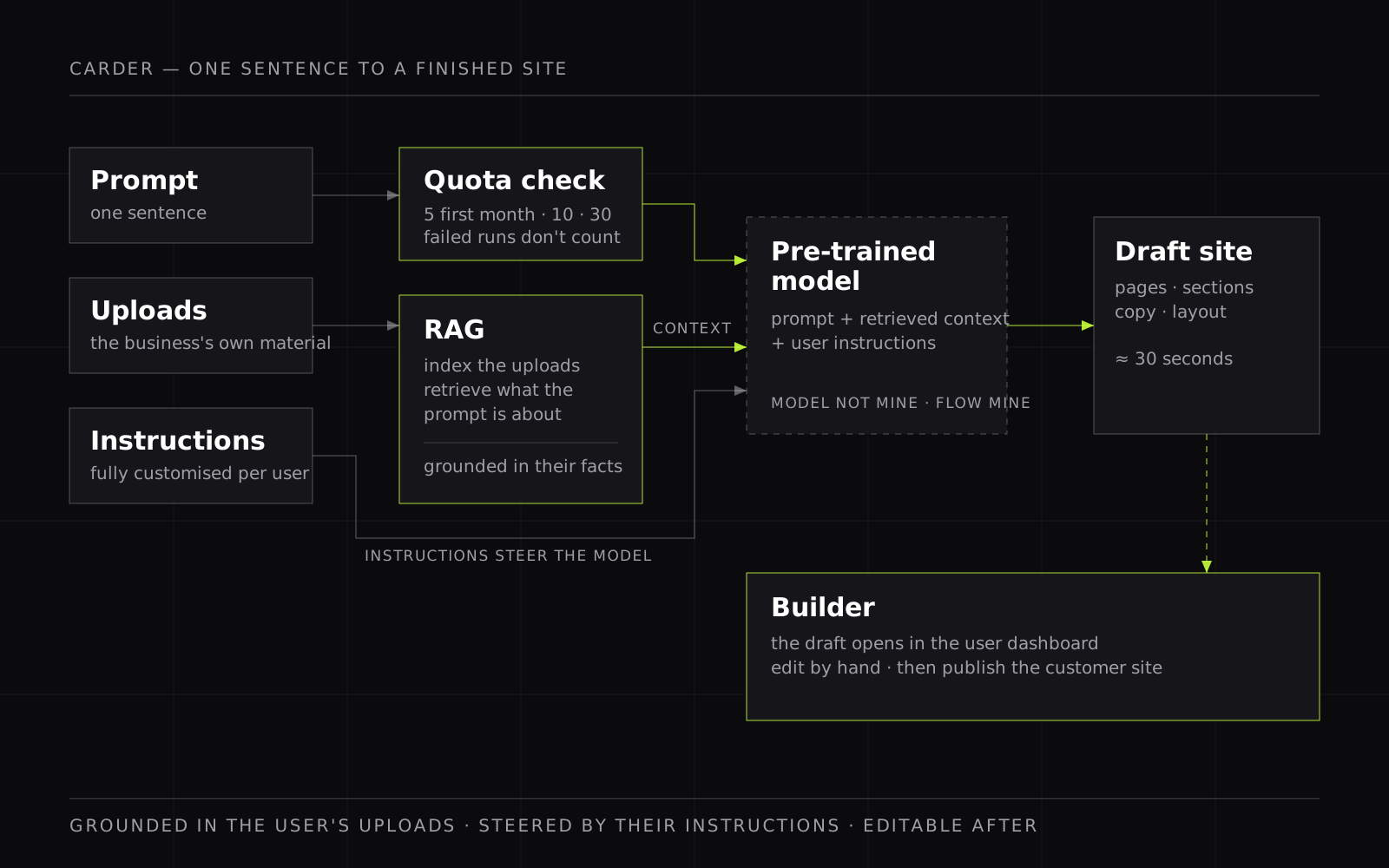
The same flow, automated with our pre-trained model. Generation is grounded by RAG over the user's own uploaded material and steered by instructions each user can fully customise, so the site reads like their business rather than a template.
[04]
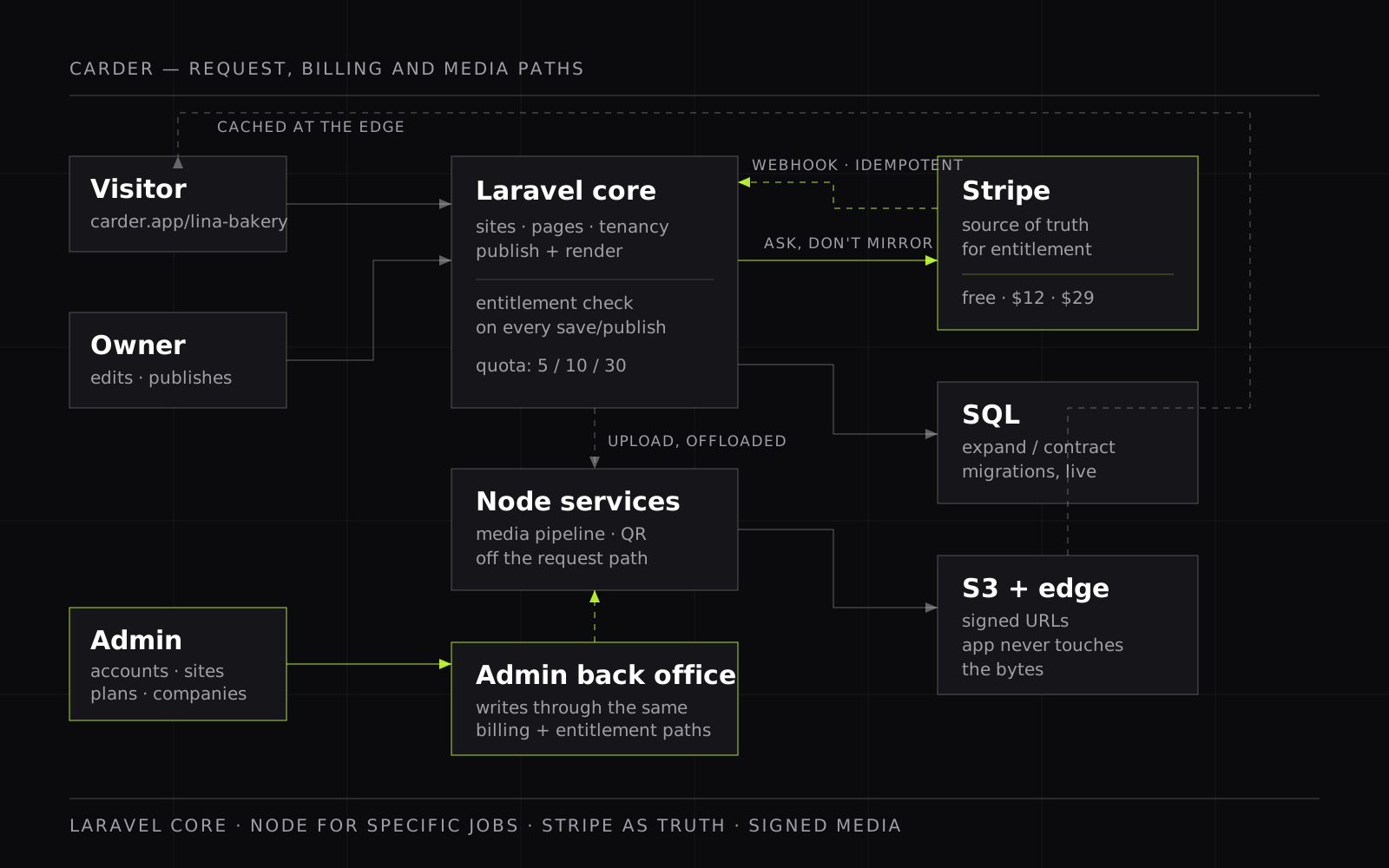
Uploads go directly to S3 through signed URLs and are delivered from the edge. The API never handles image bytes, so media growth does not consume request workers.
[05]
Free, Pro and Business plans control pages, sites, domains and generation quotas. Entitlement is derived from Stripe and briefly cached for frequent checks on save, publish and domain lookup.
[06]
The back office covers accounts, sites, companies and subscriptions without requiring production SQL. Changes flow through the same billing and entitlement paths as the product.
[07]
Quotas apply only to AI generation: 5 in a free account's first month, then 10 a month on Pro and 30 on Business. Existing sites stay editable, and failed generations do not consume allowance.
[06] What broke
!01
The first version trusted locally mirrored subscription state. Duplicate, delayed and out-of-order Stripe webhooks let that copy drift from the billing record, sometimes granting the wrong access.
!02
Entitlement now comes from Stripe. Webhooks are idempotent by event ID, and stale events are discarded, so replaying an event is a no-op.
[07] The result
150+
Users, ME & Europe
* two regions, as of Feb 2026
+40%
Adoption growth
* first tracked month to Feb 2026
3
Metered tiers
* free · $12 · $29; 5 in the first month, then 10 / 30 a month
0
Downtime migrations
* expand / contract, against live data
User count and tier structure come from platform records and public pricing. The +40% compares the first instrumented month with February 2026, not the full rebuild. Zero-downtime migrations counts schema changes shipped against live data, not uptime.
[08] What I’d do differently
I’d instrument adoption from day one. Early features shipped on intuition, so the +40% improvement only became visible after analytics arrived.
Need something like this built?
Next case study [02]
Volumize
Telehealth E-Commerce Platform
Read the case study →